

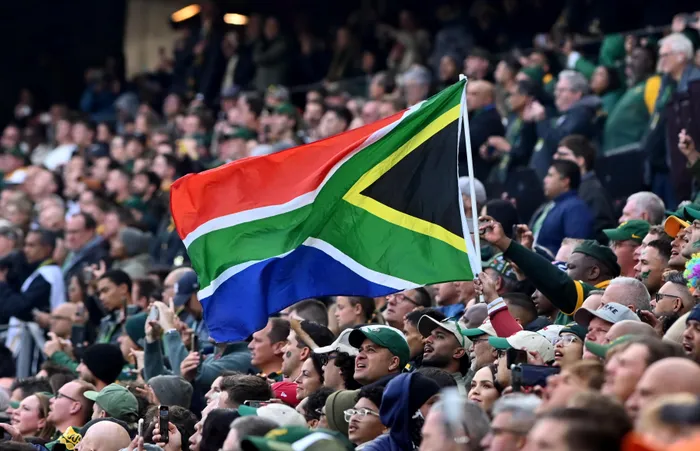
Supporters watch the Springboks beat the Wallabies at Cape Town Stadium. The Roman poet Juvenal's phrase 'bread and circuses' highlights how entertainment can distract from pressing societal issues. In South Africa, are we allowing our love for the Springboks to overshadow the real challenges we face?
Image: Ayanda Ndamane / ANA Studio
The Roman poet Juvenal coined the phrase panem et circenses—"bread and circuses"—to describe how Rome's ruling elite maintained public order. Rather than addressing the structural problems facing society, they pacified the population by providing free grain and lavish public spectacles. Gladiatorial contests, chariot races and grand festivals captivated the masses, diverting attention from corruption, economic inequality, poor governance and the gradual decline of the Empire.
More than two thousand years later, the phrase remains relevant because it captures a timeless political phenomenon: when entertainment becomes so dominant that it overshadows the difficult conversations a nation must have about its future.
This raises an uncomfortable question for South Africa.
Have our sporting triumphs, particularly the extraordinary success of the Springboks, become our modern "circuses"?
Let me be clear. This is not a criticism of the Springboks.
They represent excellence, discipline, resilience and teamwork. They have united South Africans across racial, cultural and economic divides in ways few institutions have achieved. Their achievements deserve admiration, and every South African has reason to celebrate their success.
The question is not whether the Springboks are good for South Africa.
The question is whether our collective obsession with sporting success allows us—both as citizens and as political leaders—to lose sight of the far more pressing challenges confronting the nation.
South Africa remains one of the world's most unequal societies. Millions live below the poverty line. Youth unemployment remains among the highest globally. Violent crime continues to threaten communities. Public healthcare struggles under immense pressure. Many schools fail to provide children with even the most basic educational opportunities. Electricity, water infrastructure and municipal governance remain persistent concerns in many parts of the country.
None of these problems disappear because South Africa wins another Rugby World Cup.
For a few weeks, the country celebrates. Social media explodes with patriotic messages. Politicians wrap themselves in the national flag. Public attention shifts almost entirely towards sporting success.
Then reality quietly returns.
The unemployed remain unemployed.
The hungry remain hungry.
Communities still wait for reliable water, functioning clinics, safe streets and quality education.
Sport undoubtedly generates economic activity. It supports employment, attracts tourism, stimulates hospitality and creates commercial opportunities. Professional athletes, coaches, administrators, broadcasters, sponsors and businesses all benefit from successful international competition.
But these benefits are not distributed evenly across society.
For most South Africans, the reward is emotional rather than economic. They experience pride, hope and unity—powerful emotions that should never be dismissed. National morale matters. Shared identity matters. Hope matters.
Yet hope is not the same as progress.
Unity is not the same as economic transformation.
Celebration is not the same as effective governance.
History teaches us that societies can become emotionally satisfied while remaining structurally unchanged. Citizens naturally gravitate towards stories that inspire rather than statistics that depress. Leaders, too, may find it politically easier to celebrate national victories than to explain why unemployment remains stubbornly high or why public services continue to deteriorate.
This is where the Roman analogy becomes thought-provoking.
The danger is not sport itself.
The danger lies in allowing sporting achievement to dominate the national conversation while the deeper work of rebuilding society receives far less attention.
A successful rugby team cannot substitute for a successful education system.
A World Cup cannot replace economic growth.
National pride cannot compensate for persistent inequality.
A standing ovation cannot repair failing institutions.
South Africa deserves both.
We should celebrate every Springbok victory with genuine pride. They have earned every accolade through hard work and sacrifice. They inspire millions of young South Africans to dream bigger and work harder.
But as the celebrations end and the stadium lights fade, we should ask ourselves a simple question:
Are we devoting the same passion, energy and accountability to fixing our schools, strengthening our healthcare system, creating jobs, combating corruption and restoring public trust as we do to supporting our national rugby team?
If the answer is no, then perhaps the lesson from ancient Rome deserves renewed attention.
A nation can be united by sport.
But it is transformed by education, honest leadership, economic opportunity, justice and accountable governance.
The Springboks can inspire a nation.
They cannot, and should not be expected to, solve its problems.
That responsibility belongs to all of us—citizens, civil society, business and, above all, those entrusted with governing the country.Rome eventually discovered that spectacles could delay discontent, but they could not prevent decline.
The enduring question for South Africa is whether we are using our moments of national celebration as a foundation for meaningful progress—or merely as an escape from confronting the challenges that still define everyday life.
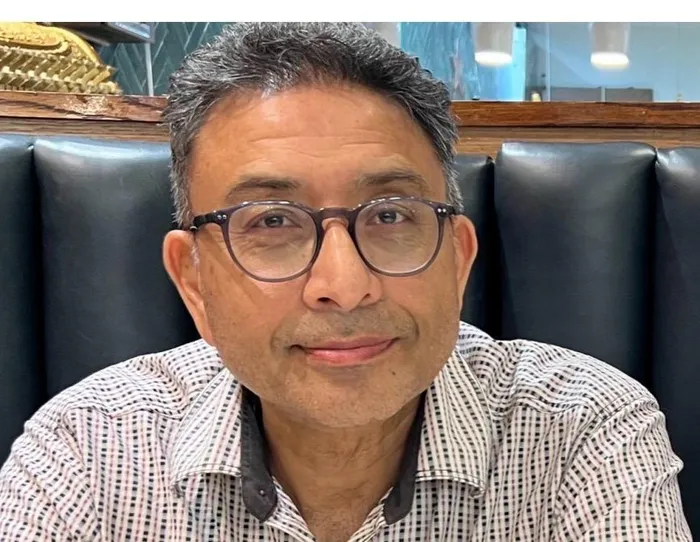
Dr Nisaar Ahmed Korowlay is a Nuclear Medicine Consultant at Tygerberg Hospital, Cape Town, with over two decades of experience. He is Chairperson of the Janjira Habsani Educational and Social Society (JHESS), where he champions education, community service, and ethical leadership. Dr Korowlay combines professional excellence with a deep commitment to faith, compassion, and community empowerment. His guiding philosophy is simple: true leadership is measured by service to others.
Image: Supplied
* Dr Nisaar Ahmed Korowlay is a Nuclear Medicine Consultant at Tygerberg Hospital, Cape Town, with over two decades of experience. He is Chairperson of the Janjira Habsani Educational and Social Society (JHESS), where he champions education, community service, and ethical leadership.
* The views expressed do not necessarily reflect the views of IOL.
IOL Opinion

 LGE2026